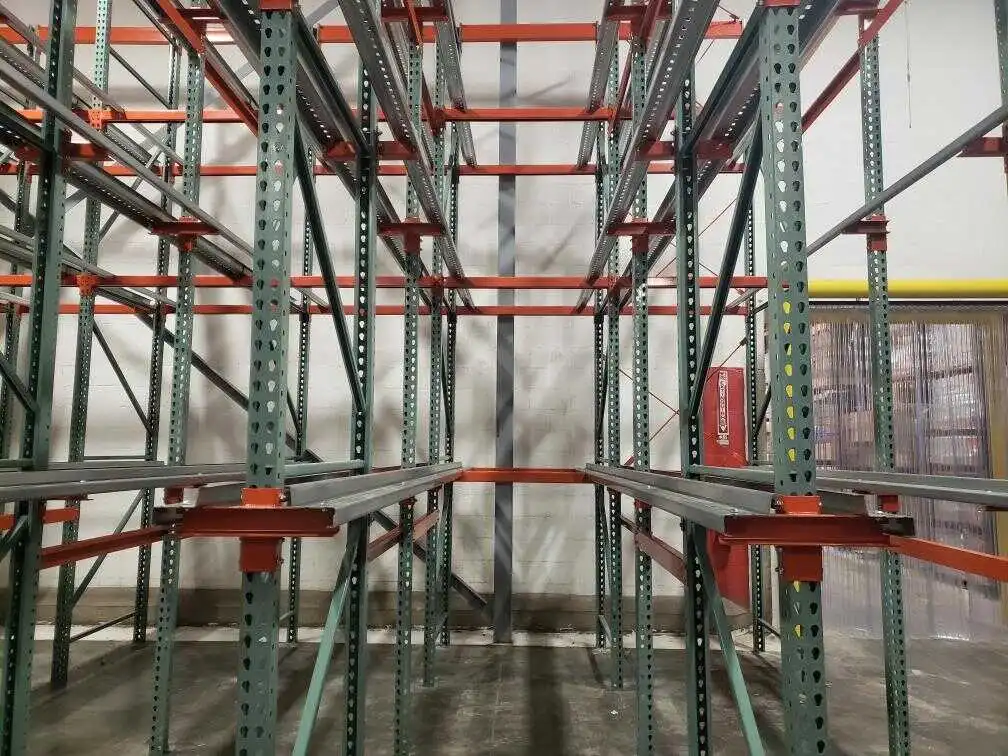
Drive-in Pallet
Racking System

A drive-in pallet racking system is a cost-effective solution when you need dense pallet organization. Store large volumes of similar products easily, all while maximizing warehouse floor space for various process and storage needs. Drive-in pallet racks will enable you to optimize your storage capacity for smoother operations. ProRack offers a wide range of in-stock and customizable racking systems to meet your facility’s storage needs. Our experienced team will help you determine the best pallet storage system to benefit your operations. We can also purchase your existing rack system when you downgrade or upgrade your pallet flow system.

What Is a Drive-in
Racking System?

A drive-in rack system allows you to store pallets multiple positions deep, loading and retrieving pallets from a single entrance. It relies on pallet racking components such as uprights, top tie beams and pallet support rails to provide the height and depth needed for deep storage.

This pallet flow racking system is highly customizable, enabling you to store pallets as high, wide or deep as your warehouse allows and your operations require. It helps you maximize the square footage in your warehouse, holding as many products as possible while still having room for other essential processes.

Drive-in racks are common in the food and beverage industry, though they can improve operations in any warehouse that utilizes last-in, first-out (LIFO) processes
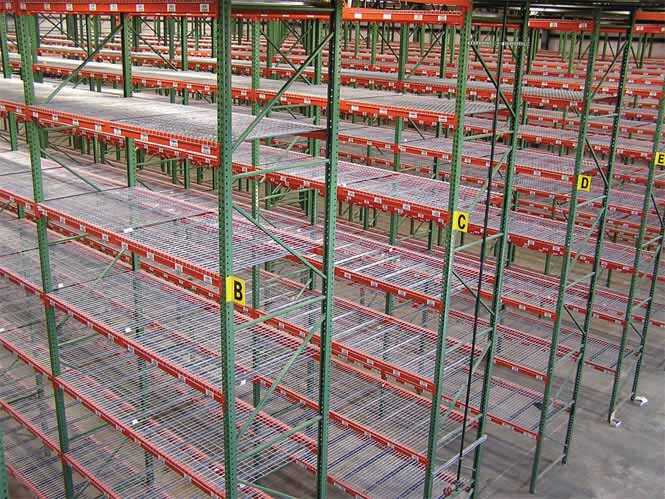
A single pallet racking system consists of three main components:

01. Uprights

The pallet rack system’s vertical frames determine the material handling system’s height and depth.

02. Beams

These horizontal bars connect to the uprights to support
the pallets and dictate each bay’s length.

03. Wire decking

This component lays over the beams |and supports the pallets while keeping the beams from spreading.

Selective pallet rack systems are versatile, offering benefits to a wide range of industries such as:

Retail

Manufacturing

Food Handling

General Warehousing

Drive-in Racking Consideration

When designing and implementing a double-deep pallet racking system, you will need to account for:

Pallets

Your pallets’ size and weight will determine the type of racking you need. The depth of each pallet land will depend on the number of pallets you need to store and the length of time pallets can be stored.

Forklifts

Your racking system’s dimensions will also depend on your forklifts’ widths and heights. The racking system’s maximum height will be determined by the elevation height your forklifts can reach.

What space is available:

The height and width of open space in your warehouse affect how many racks you can fit into your facility.

Advantages of a Drive-in Pallet Racking System

Single-deep pallet racks can benefit your warehouse’s operational flow, providing flexibility, accessibility and optimization. This racking system will increase your storage capacity, enabling you to increase productivity and revenue.

Double-deep pallet racking systems offer several benefits for certain warehouse operations. These systems provide:

FAQ

What is drive-in pallet racking?

Drive-in pallet racking is a high-density storage system that lets you store pallets several positions deep. Forklifts drive right into the rack structure through a single access point to place and pull pallets, which means warehouses can fit a lot more inventory into a lot less floor space.

The big one is storage density — drive-in racking cuts down on the number of aisles you need, which frees up a ton of space. It’s great for maximizing your footprint, consolidating similar inventory, cutting down forklift travel, and boosting efficiency when you’re storing large quantities of the same or similar products.

It’s best suited for large quantities of similar products with relatively few SKUs. It works especially well for products that fit a last-in, first-out (LIFO) inventory approach.

Selective pallet racking gives you direct access to each individual pallet position but generally needs more aisles to do it. Drive-in racking stacks pallets several positions deep, which boosts your storage density but trades off some of that direct access.

Capacity comes down to the rack design, pallet support rails, uprights, configuration, pallet dimensions, and how the weight is distributed. The system should always be designed around the specific weight and dimensions of what you’re storing.

It could be a great fit if you’re storing large quantities of similar products and want to maximize storage density. Take a look at your inventory method, pallet dimensions, product turnover, available space, and forklift equipment when deciding.

By storing pallets several positions deep, drive-in systems cut down on the need for individual access aisles. That creates a more condensed storage area and lets a bigger share of your warehouse floor go toward actual inventory.

It’s typically used with a last-in, first-out (LIFO) approach, since pallets are loaded and retrieved from the same side. That makes it especially handy for products with longer shelf lives or inventory that doesn’t need strict stock rotation.

It shows up in all kinds of warehouse environments, but it really shines for operations storing high volumes of similar products — think food and beverage storage and other high-density warehousing applications.

Yes, it’s a great match. High-density storage is especially valuable in refrigerated and temperature-controlled facilities, since it lets you fit more product into a smaller footprint. Cutting down on unused airspace can also help reduce how much space you need to heat or cool.

You’ll want to think through forklift width, height, turning requirements, and maximum lift height. Since the forklift actually enters the rack structure, the system needs to give your equipment the clearance it needs.

Yes, it’s highly customizable. It can be configured around your available warehouse height and width, pallet dimensions, storage depth, inventory quantities, and operational needs.

Depth depends on how many pallets you need to store, your pallet dimensions, product turnover, available warehouse space, and operational requirements. Drive-in systems can go several pallet positions deep to really maximize density.

Generally, yes — drive-in racking tends to offer greater storage density since it needs fewer forklift aisles. That said, selective racking gives you easier access to individual pallets, so it really comes down to whether storage density or pallet accessibility matters more to your operation.

Share your pallet sizes and weights, inventory quantities, available warehouse dimensions, forklift equipment, and desired storage capacity. ProRack can use those details to help figure out a drive-in rack configuration that fits your operation.

Find Your System

"*" indicates required fields

Secret Link